How Universities Can Use AI to Improve Student Placement Readiness| PeopleXM
Discover how universities can use AI for skill assessments, mock interviews, resume building, and placement analytics to improve student employability.
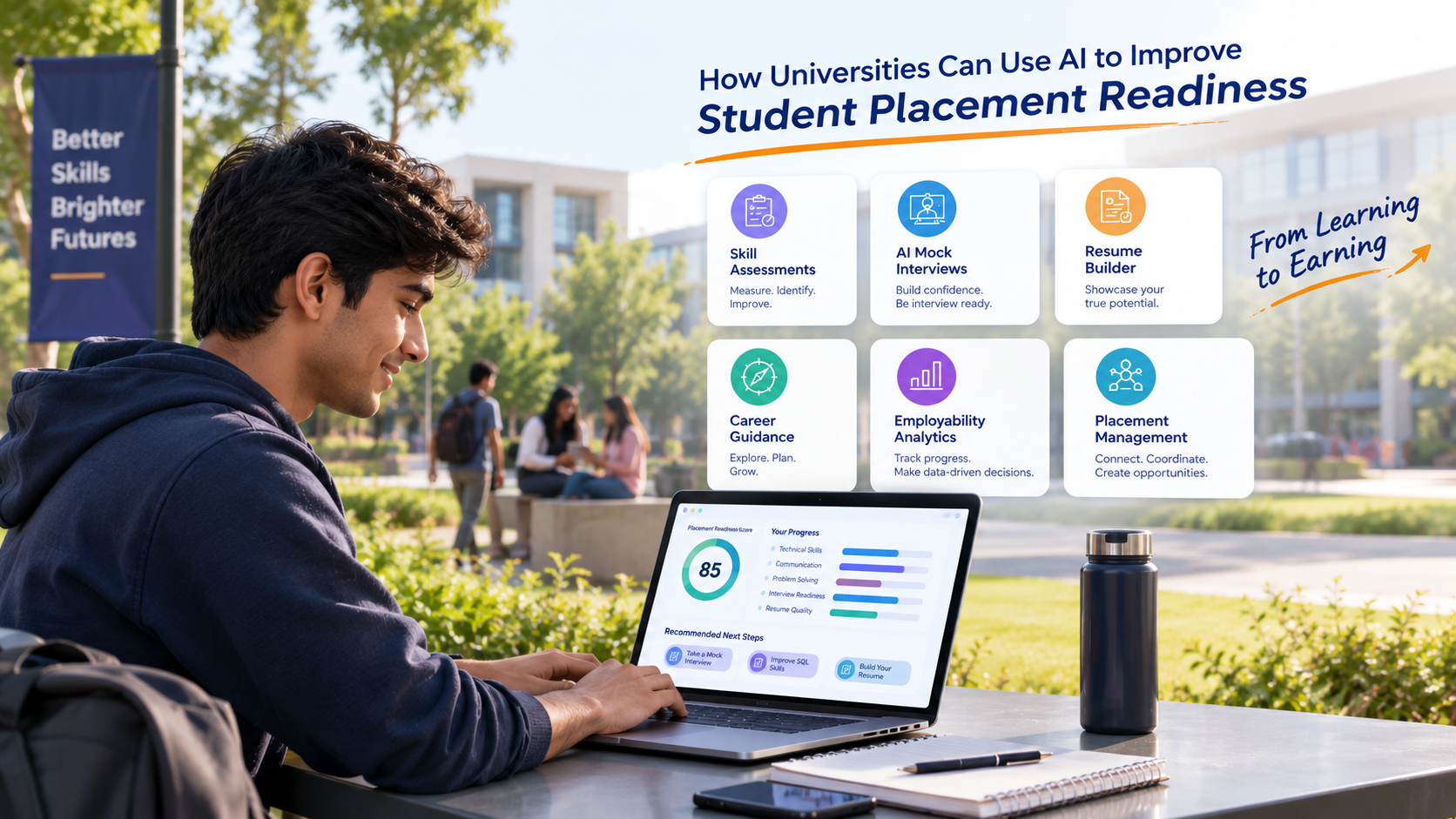
How Universities Can Use AI to Improve Student Placement Readiness For universities, preparing students for successful careers involves much more than completing a curriculum or organizing campus recruitment drives.
Students need relevant skills, communication abilities, interview confidence, industry awareness, and the ability to present their capabilities effectively to employers. However, these competencies can vary significantly across students, departments, and academic years.
This creates an important challenge for Training and Placement Officers (TPOs): How can universities identify skill gaps early, prepare students systematically, and measure whether they are genuinely ready for employment?
Artificial intelligence (AI) is creating new opportunities to address this challenge.
By combining skill assessments, AI-powered mock interviews, resume-building tools, career guidance, and employability analytics, universities can take a more structured approach to student placement readiness.
Instead of focusing only on placement outcomes at the end of the academic year, institutions can monitor student progress and provide support well before recruitment begins.
In this article, we explore how AI can help universities strengthen placement preparation, improve student employability, and make campus placement processes more data-informed.
What Is Student Placement Readiness? Student placement readiness refers to how prepared a student is to participate in recruitment processes and demonstrate the competencies required for an entry-level role.
It goes beyond academic performance.
A student may have strong theoretical knowledge but struggle with technical interviews. Another may possess the necessary technical skills but find it difficult to communicate effectively or explain their projects.
Placement readiness typically includes several dimensions:
Technical skills: Knowledge and practical capabilities relevant to a target role. Communication skills: The ability to explain ideas clearly and professionally. Problem-solving: The ability to analyze questions and approach unfamiliar challenges. Interview readiness: Confidence and preparedness for technical and behavioral interviews. Resume quality: The ability to present relevant skills, projects, internships, and achievements. Career awareness: Understanding available roles, employer expectations, and potential career paths. A comprehensive placement strategy helps universities understand these dimensions and provide targeted support where students need it most.
Why Traditional Placement Preparation Can Fall Short Many universities already conduct placement training, aptitude sessions, resume workshops, and mock interviews. These initiatives are valuable, but delivering consistent preparation at scale can be difficult.
- Limited visibility into student skill gaps A university may know how many students attended a training session without knowing whether they developed the required skills.
Without structured assessments, it can be difficult to identify which students need additional technical, communication, or interview preparation.
- Different levels of readiness across departments Students from different academic backgrounds may require different preparation pathways.
Even within the same department, students can have different strengths, interests, and learning needs. A uniform training program may not address every student's requirements.
- Manual tracking and fragmented information Placement teams may maintain student records, assessment results, resumes, training attendance, and employer information across multiple spreadsheets or systems.
This can make it harder to obtain a complete view of student progress.
- Limited opportunities for individual practice Conducting personalized mock interviews and providing detailed feedback to every student can require substantial time and coordination.
As student numbers increase, giving each student sufficient practice becomes more challenging.
- Placement preparation often starts too late When employability activities are concentrated in the final semester, students may have limited time to address skill gaps before recruitment begins.
A more effective approach starts earlier and tracks readiness throughout the academic journey.
How AI Can Improve Student Placement Readiness AI can help universities make employability preparation more structured, accessible, and measurable. Its value comes from supporting the work of educators and placement teams—not replacing their judgment.
- Assess student skills before recruitment begins AI-enabled assessment platforms can help universities evaluate students across role-relevant competencies.
Depending on the assessment design, these may include technical knowledge, aptitude, problem-solving, communication, or other job-related skills.
For example, students preparing for software development roles may need assessments covering programming, logical reasoning, and problem-solving. Students pursuing business development roles may benefit from assessments related to communication, business aptitude, and customer-facing situations.
Assessment results can help placement teams understand:
Which competencies students demonstrate well. Which skills require additional development. How readiness varies across departments or target roles. Which students may benefit from additional practice. These insights can help universities move from generalized training toward more targeted preparation.
- Use AI mock interviews to build confidence Interviews are an important part of recruitment, yet students may have limited opportunities to practice in realistic conditions before facing an employer.
AI-powered mock interviews can provide additional opportunities for students to rehearse responses, practice role-specific questions, and receive structured feedback.
Students can use this practice to improve how they explain projects, answer behavioral questions, and communicate their technical knowledge.
For placement departments, mock interview tools can help make practice available to larger student groups without requiring every session to be conducted individually by a faculty member.
The goal is not to let AI decide who deserves a job. It is to give students more opportunities to prepare for real interviews.
- Help students create stronger resumes A resume is often an employer's first introduction to a candidate.
Students may have relevant projects, internships, certifications, or academic achievements but struggle to communicate them effectively.
AI-assisted resume-building tools can help students organize their experience, improve clarity, and structure their resumes around relevant skills and accomplishments.
Universities can encourage students to develop resumes that clearly communicate:
Technical and transferable skills. Academic projects and practical work. Internships and relevant experience. Certifications and achievements. Career interests and target roles. Resume tools should support accurate representation of student experience rather than encourage exaggerated claims or unnecessary keyword stuffing.
- Identify skill gaps and recommend targeted development Assessment results become more useful when they lead to action.
AI-supported employability platforms can help highlight areas where students may need further preparation.
For example, a student preparing for a data analyst role might demonstrate strong logical reasoning but need additional practice in SQL and data interpretation.
Another student may have suitable technical knowledge but need support with interview communication.
With these insights, placement teams can organize targeted training, recommend relevant learning activities, and help students focus on the competencies most relevant to their goals.
This creates a more practical cycle:
Assess → Identify gaps → Develop skills → Practice → Reassess
Over time, universities can use this process to track progress rather than relying solely on attendance or course completion.
- Track placement readiness through measurable indicators A university needs more than a list of students who have registered for placements. It needs a clearer understanding of student preparedness.
A placement readiness score can bring together selected indicators, such as assessment performance, demonstrated skills, and mock interview progress, into a structured view of readiness.
For example, a university may track readiness across categories such as:
Technical competency. Aptitude and problem-solving. Communication. Resume preparedness. Interview practice. Any composite score should be clearly defined, relevant to the target role, and interpreted alongside its underlying measures. It should not be treated as a definitive prediction of employability or used as the sole basis for excluding students from opportunities.
When used responsibly, readiness indicators can help TPOs identify students who may benefit from additional support and evaluate whether preparation initiatives are making a difference.
- Give placement teams department-wise employability insights Institution-level placement data can hide important differences between departments, programs, and graduating cohorts.
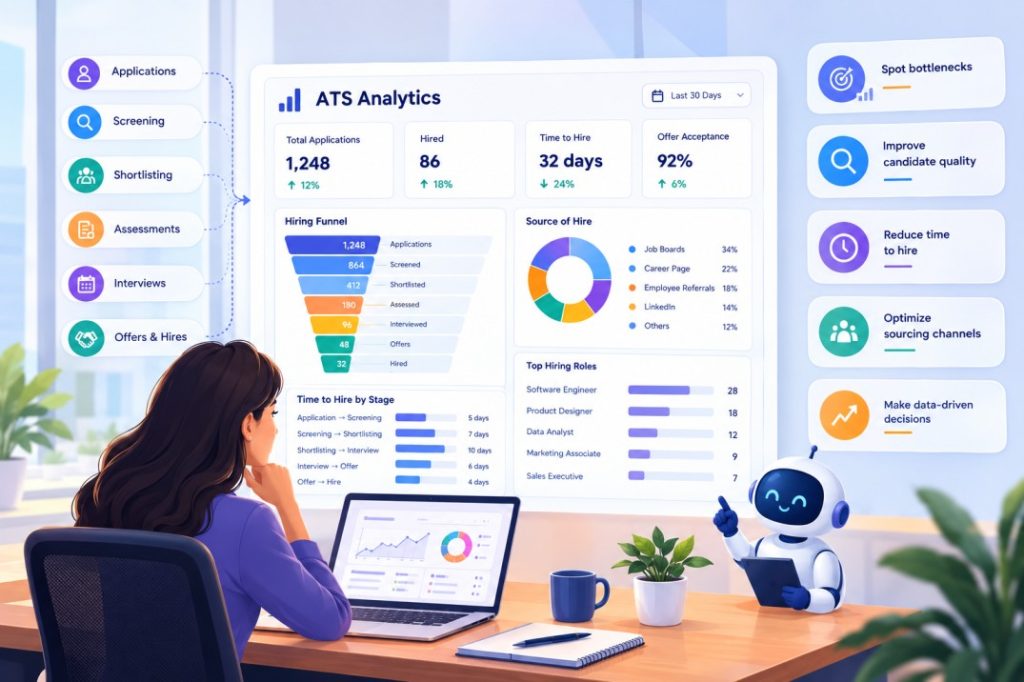
AI-enabled analytics can help placement teams examine readiness trends across student groups and competencies.
For example, a dashboard might help a university identify:
Departments where students need additional interview preparation. Common technical skill gaps within a graduating cohort. Participation and progress in employability activities. Changes in assessment performance over time. Areas where additional training resources may be useful. These insights can help placement teams work with faculty and department heads to design more targeted interventions.
The objective is to support student development and institutional planning—not to label departments or students based on a single metric.
- Support career guidance and role-based preparation Students may not always know which roles align with their interests, strengths, and existing capabilities.
AI-assisted career guidance can help students explore potential career paths, understand relevant skill requirements, and identify areas for further learning.
For example, a computer science student may explore software development, quality assurance, data analytics, or technical support roles.
Once students identify a target role, they can work toward the skills, resume improvements, and interview preparation relevant to that path.
Career recommendations should remain guidance rather than rigid assignments. Students should be able to explore different paths and make informed choices based on their interests and circumstances.
- Organize placement activities more efficiently Placement readiness is connected to the broader placement process.
Universities need to coordinate student records, employer opportunities, assessment activities, placement drives, and progress tracking.
A centralized campus placement platform can help reduce fragmented workflows by bringing relevant activities and information into a more organized system.
Depending on the platform's capabilities, this can support student onboarding, assessment management, career preparation, job and internship opportunities, campus drive coordination, and placement tracking.
Better coordination can give placement teams more time to focus on employer relationships and student support.
From Traditional Placement Training to AI-Assisted Readiness The difference is not simply whether a university uses AI. It is whether the university can use evidence to improve student preparation.
Traditional approach AI-assisted approach General training for large groups More targeted preparation based on identified needs Limited assessment of individual skills Structured skill assessments and progress indicators Mock interviews dependent on available schedules Additional opportunities for AI-supported interview practice Resume preparation through periodic workshops Accessible resume-building support Manual tracking across separate records Centralized visibility where supported by the platform Placement outcomes reviewed at the end Readiness and progress monitored throughout preparation AI does not make every process better automatically. The strongest results depend on relevant assessments, thoughtful implementation, faculty involvement, and continuous review.
How Universities Can Implement AI for Placement Readiness Institutions do not need to transform every placement activity at once. A phased approach can help them start with clear objectives and evaluate what works.
Step 1: Define placement readiness for each target role Work with faculty, placement teams, and employer partners to identify the competencies relevant to common graduate roles.
Different roles require different skills, so readiness criteria should reflect the positions students are preparing for.
Step 2: Establish a baseline Assess students early enough to leave time for improvement.
Use the results to understand existing strengths and identify development needs across departments and target roles.
Step 3: Build targeted preparation pathways Use the assessment findings to organize relevant training, skill development, resume support, and mock interviews.
Avoid assuming that every student requires the same intervention.
Step 4: Make practice accessible Give students opportunities to practice throughout the academic year rather than limiting employability activities to the weeks immediately before campus drives.
Step 5: Monitor progress Review assessment results, participation, mock interview progress, and changes in identified skill gaps.
Use the data to improve preparation programs rather than simply generate reports.
Step 6: Connect readiness with placement activities Help students apply their preparation to relevant jobs, internships, and campus recruitment opportunities.
Readiness insights should support students in pursuing suitable opportunities, not become an automatic barrier to participation.
Step 7: Review outcomes and improve Compare readiness indicators over time and review placement outcomes alongside other relevant factors.
Gather feedback from students, faculty, and employers to identify what should change in the next preparation cycle.
What Should Universities Measure? A practical measurement framework can help universities understand whether their AI-enabled placement initiatives are delivering value.
Useful indicators include:
Student readiness Skill assessment performance. Role-specific competency gaps. Mock interview participation and progress. Resume completion and improvement. Program effectiveness Participation in preparation activities. Changes in skill gaps over time. Completion of recommended learning activities. Student feedback on preparation resources. Placement outcomes Students participating in recruitment. Interview progression and offer outcomes. Placement rates, interpreted in context. Employer feedback on graduate preparedness. Operational effectiveness Time spent coordinating placement activities. Completion of student records. Campus drive coordination and tracking. Timeliness and usefulness of placement reporting. Universities should establish clear definitions for each metric and avoid attributing changes in placement outcomes to AI alone. Employer demand, economic conditions, student preferences, and recruitment criteria also influence results.
Responsible AI: What Universities Should Keep in Mind Using AI in higher education requires care, especially when tools influence how students are evaluated or supported.
Universities should consider the following principles.
Protect student data Collect only the information needed for defined educational and placement purposes. Establish appropriate access controls, retention practices, and clear communication about how student data is used.
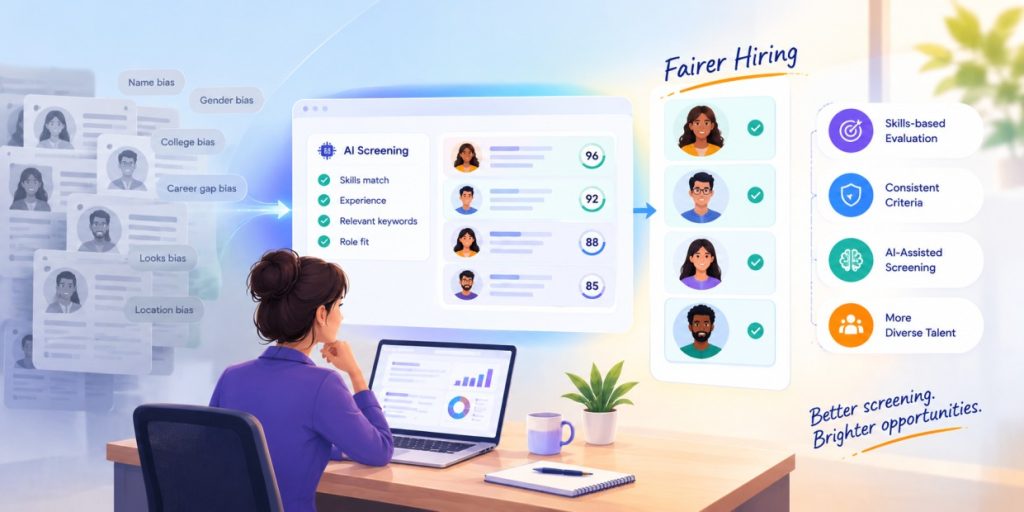
Evaluate tools for fairness Assessment methods and AI-generated recommendations should be reviewed for unintended disparities. Institutions should consider whether students have equitable access to preparation resources and whether the tools work appropriately for their student population.
Keep humans involved Faculty and placement professionals should retain oversight of important decisions. AI-generated scores or recommendations should not be treated as unquestionable judgments about a student's potential.
Make results understandable Students should be able to understand what an assessment is intended to measure and how they can use the feedback to improve.
Focus on development, not labels A readiness score should help identify opportunities for growth. It should not permanently classify a student as employable or unemployable.
Responsible implementation helps universities use technology to expand student opportunities while maintaining trust and accountability.
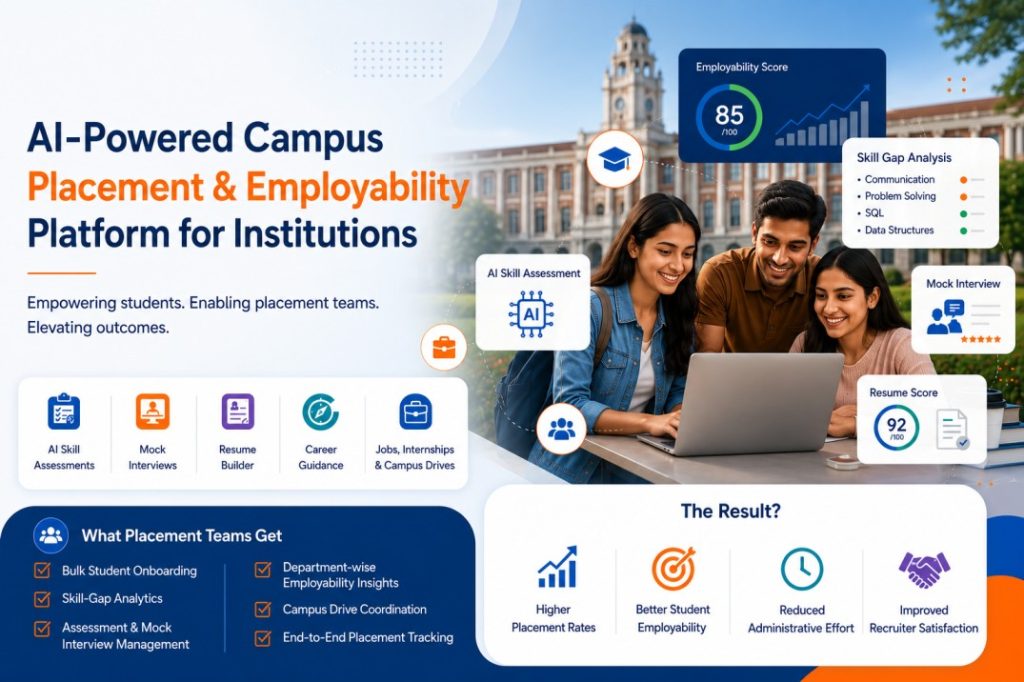
How PeopleXM Campus Connect Helps Universities Improve Placement Readiness PeopleXM Campus Connect is an AI-powered campus placement and employability platform designed to support universities in preparing students for the transition from education to employment.
It brings together employability preparation and placement-related capabilities to help institutions develop a more structured view of student readiness.
Key capabilities include:
AI-powered skill assessments: Help evaluate relevant student competencies and identify areas where additional preparation may be beneficial. AI mock interviews: Give students opportunities to practice interview responses and build confidence before employer interviews. Placement Readiness Score: Provide a structured indicator of student preparedness based on defined readiness measures, helping placement teams identify potential development needs. Resume builder: Support students in creating clear, structured resumes that present their skills, projects, and experience. Career guidance: Help students explore possible career paths and understand the skills associated with different roles. Skill-gap and employability analytics: Give placement teams visibility into student readiness trends and areas where targeted development may be useful. Placement coordination and tracking: Support the organization of placement activities, opportunities, and student progress through a more structured workflow. Together, these capabilities can help universities move toward a more proactive approach to employability preparation—one that focuses not only on arranging recruitment opportunities but also on preparing students to make the most of them.
Learn more about PeopleXM at https://peoplexm.ai/.
The Future of University Placements Is About Readiness, Not Just Recruitment University placement success is often discussed in terms of the number of students placed or the companies visiting campus.
These outcomes matter, but they represent only part of the picture.
Universities also need to understand whether students are developing relevant skills, gaining interview confidence, and receiving the support they need to pursue suitable opportunities.
AI can help institutions make this work more measurable and accessible. Assessments can reveal skill gaps, mock interviews can expand practice opportunities, resume tools can support career preparation, and analytics can help placement teams make better-informed decisions.
The real opportunity lies in connecting these capabilities into a continuous student development process.
When universities start measuring and improving placement readiness well before recruitment season, they can make employability preparation more proactive, targeted, and student-focused.
With a structured approach and responsible use of AI, institutions can strengthen their placement processes while keeping student growth at the center.
Frequently Asked Questions
-
How can AI help universities improve student placement readiness? AI can support skill assessments, mock interviews, resume preparation, career guidance, skill-gap identification, and employability analytics. These capabilities help universities understand student needs and organize more targeted preparation.
-
What is an AI-powered campus placement platform? An AI-powered campus placement platform uses AI-enabled and digital tools to support activities such as student skill assessments, interview preparation, employability tracking, career guidance, and placement coordination.
-
What is a Placement Readiness Score? A Placement Readiness Score is a structured indicator based on selected measures of student preparedness. Depending on its design, it may reflect skills, assessments, or interview practice. It should be interpreted alongside detailed feedback rather than treated as a guarantee of employment.
-
Can AI mock interviews replace faculty-led mock interviews? No. AI mock interviews can provide additional practice opportunities, while faculty and industry professionals can offer contextual guidance, mentorship, and feedback based on real-world experience. Combining both approaches can provide a more comprehensive preparation experience.
-
How can universities identify student skill gaps? Universities can use role-relevant assessments, mock interview feedback, faculty observations, and employer input to identify development needs. Analytics can help organize these insights and guide targeted preparation.
-
Is an AI-powered placement platform useful for smaller universities? It can be useful if the platform's capabilities, cost, implementation requirements, and student support model fit the institution's needs. Smaller universities may benefit from more organized assessment, preparation, and tracking workflows, but should evaluate the platform against their specific objectives.
-
When should universities start preparing students for placements? Placement readiness activities can begin well before the final semester. Early assessments and regular practice give students more time to develop relevant skills and allow institutions to address gaps before recruitment begins.
Suggested Internal Links AI-Powered Campus Placement & Employability Platform Student Employability and Placement Readiness AI Mock Interviews for Students Skills-Based Assessments Career Guidance for Students Campus Placement Management ATS Analytics Candidate Experience & AI Help Students Become More Placement-Ready Preparing students for employment requires more than organizing campus drives. It requires visibility into their skills, opportunities to practice, and a structured way to track progress.
PeopleXM Campus Connect helps universities bring employability preparation and placement-related activities into a more organized workflow.
Explore PeopleXM Campus Connect and discover how your institution can take a more proactive approach to student placement readiness.
👉 Visit: https://peoplexm.ai/
Keep reading