
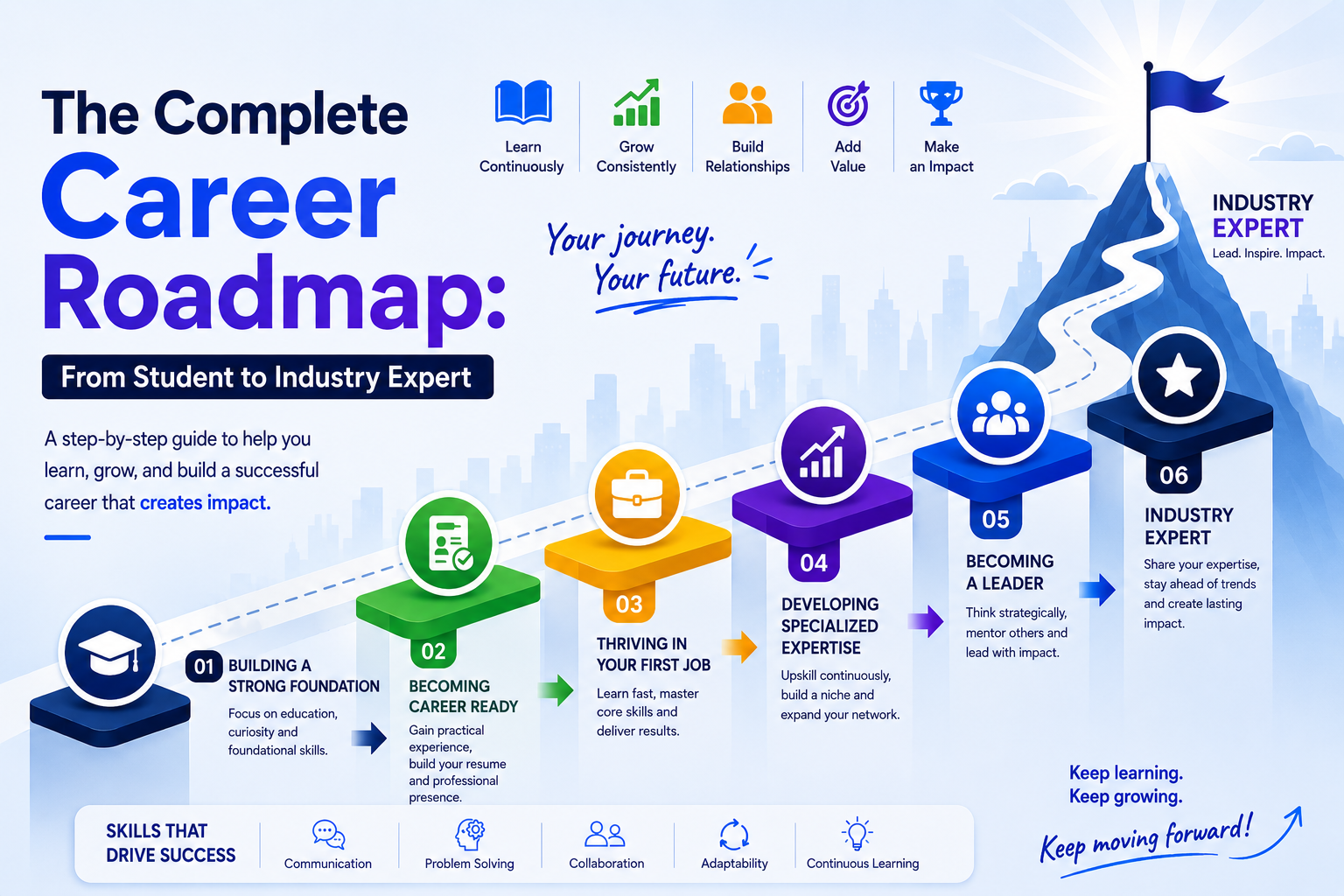
The Complete Career Roadmap: From Student to Industry Expert
Every successful professional starts with the same question:
“How do I build a successful career?”
Whether you’re a student preparing for your first job, a young professional navigating your early years, or someone aspiring to become a recognized industry leader, career growth doesn’t happen by chance. It is built through intentional learning, continuous improvement, and strategic decisions.
The journey from student to industry expert is not defined by job titles alone. It is shaped by the skills you acquire, the experiences you gain, and the value you create throughout your professional life.
Let’s explore the complete roadmap.
Stage 1: Building a Strong Foundation as a Student
Your career journey begins long before your first paycheck.
The student phase is about developing knowledge, curiosity, and a growth mindset.
Focus Beyond Academics
While grades are important, employers increasingly look for individuals who can apply knowledge in practical situations.
Students should focus on:
- Problem-solving abilities
- Communication skills
- Critical thinking
- Teamwork and collaboration
- Digital literacy
These foundational skills remain valuable throughout your career.
Explore Different Interests
Many students feel pressure to decide their career path immediately.
Instead, use this stage to:
- Participate in projects
- Join student communities
- Attend workshops and webinars
- Explore different industries
Exploration helps identify your strengths and interests.
Develop a Learning Mindset
The most successful professionals never stop learning.
Building this habit early creates a strong advantage later in your career.
Stage 2: Becoming Career Ready
Knowledge alone is no longer enough.
Employers seek candidates who can contribute from day one.
Gain Practical Experience
Internships, freelance projects, volunteering, and part-time work provide valuable exposure to real-world challenges.
Benefits include:
- Understanding workplace dynamics
- Building confidence
- Developing professional skills
- Strengthening your resume
Even small experiences can create meaningful learning opportunities.
Build an ATS-Friendly Resume
Your resume is often your first introduction to an employer.
A strong resume should:
- Highlight relevant skills
- Showcase achievements
- Include project experience
- Be easy to read and ATS-friendly
A well-structured resume improves your chances of getting shortlisted.
Establish Your Professional Presence
Today’s professionals should begin building their online presence early.
Consider:
- Creating a LinkedIn profile
- Connecting with professionals
- Sharing insights and learnings
- Following industry trends
Professional visibility can open unexpected opportunities.
Stage 3: Thriving in Your First Job
Landing your first job is an achievement.
However, it is only the beginning of your career journey.
Learn Faster Than Others
The first few years of your career should focus on learning.
Seek opportunities to:
- Understand business operations
- Learn from experienced colleagues
- Take ownership of responsibilities
- Ask thoughtful questions
The speed of your learning often determines the speed of your growth.
Master Core Skills
At this stage, focus on becoming excellent at your role.
Develop expertise in:
- Technical skills
- Industry knowledge
- Communication
- Time management
- Problem-solving
Strong execution builds credibility.
Seek Feedback Regularly
Feedback helps identify strengths and areas for improvement.
Professionals who actively seek feedback often grow faster than those who avoid it.
Stage 4: Developing Specialized Expertise
As your experience grows, general knowledge is no longer enough.
To stand out, you must become known for something specific.
Identify Your Area of Expertise
Ask yourself:
- What problems do I enjoy solving?
- What skills am I strongest at?
- Which industry challenges interest me most?
This helps you build a niche.
Continue Upskilling
Industries evolve rapidly.
Professionals should regularly invest in:
- Certifications
- Online courses
- Industry events
- Professional communities
Continuous learning keeps your expertise relevant.
Build Professional Relationships
Career growth is often accelerated through relationships.
Network with:
- Industry peers
- Mentors
- Thought leaders
- Professional communities
Strong networks create long-term opportunities.
Stage 5: Becoming a Leader
Leadership is not defined by a title.
It begins when you start influencing outcomes and helping others succeed.
Develop Strategic Thinking
Move beyond day-to-day tasks.
Understand:
- Business objectives
- Market trends
- Customer needs
- Organizational priorities
Strategic thinking separates managers from leaders.
Mentor Others
Sharing knowledge benefits both the mentor and the learner.
Mentoring helps:
- Build leadership skills
- Strengthen communication
- Increase professional influence
Great leaders create more leaders.
Lead Through Impact
Leadership is about delivering results while empowering others.
Focus on:
- Collaboration
- Accountability
- Decision-making
- Problem-solving
These capabilities become increasingly important as responsibilities grow.
Stage 6: Becoming an Industry Expert
Industry experts are recognized for their knowledge, experience, and contributions.
They are often the professionals others turn to for guidance.
Share Your Expertise
Thought leadership helps establish credibility.
You can share knowledge through:
- Articles and blogs
- LinkedIn posts
- Webinars and events
- Industry discussions
- Mentorship programs
Visibility amplifies expertise.
Stay Ahead of Industry Trends
Experts remain curious.
They continuously study:
- Emerging technologies
- Market changes
- Industry innovations
- Future workforce trends
Learning remains a lifelong commitment.
Create Meaningful Impact
True expertise is measured by the value you create.
Industry experts contribute by:
- Solving complex problems
- Driving innovation
- Influencing best practices
- Helping others grow
Their impact extends beyond their own organizations.
Skills That Matter at Every Career Stage
Regardless of where you are in your journey, some skills remain universally important.
Communication
The ability to express ideas clearly and effectively.
Adaptability
The willingness to learn and evolve with changing environments.
Problem-Solving
The ability to identify challenges and develop practical solutions.
Collaboration
Working effectively with diverse teams and stakeholders.
Continuous Learning
Staying relevant in an ever-changing professional landscape.
Common Career Mistakes to Avoid
Waiting for Opportunities
Successful professionals create opportunities rather than waiting for them.
Ignoring Skill Development
Job titles change. Skills remain valuable.
Avoiding Feedback
Growth often begins with constructive feedback.
Neglecting Networking
Relationships can accelerate career progression significantly.
Stopping Learning
Career growth slows when learning stops.
How AI and Technology Are Shaping Modern Careers
The future of work is being influenced by:
- Artificial Intelligence
- Automation
- Data Analytics
- Digital Transformation
Professionals who embrace technology and continuously adapt will be better positioned for long-term success.
The goal is not to compete with technology but to learn how to work alongside it effectively