AI Placement Readiness: A Guide for Universities
See how AI helps universities spot skill gaps earlier, prepare students for interviews, and improve placement outcomes, with a practical framework and safeguards.
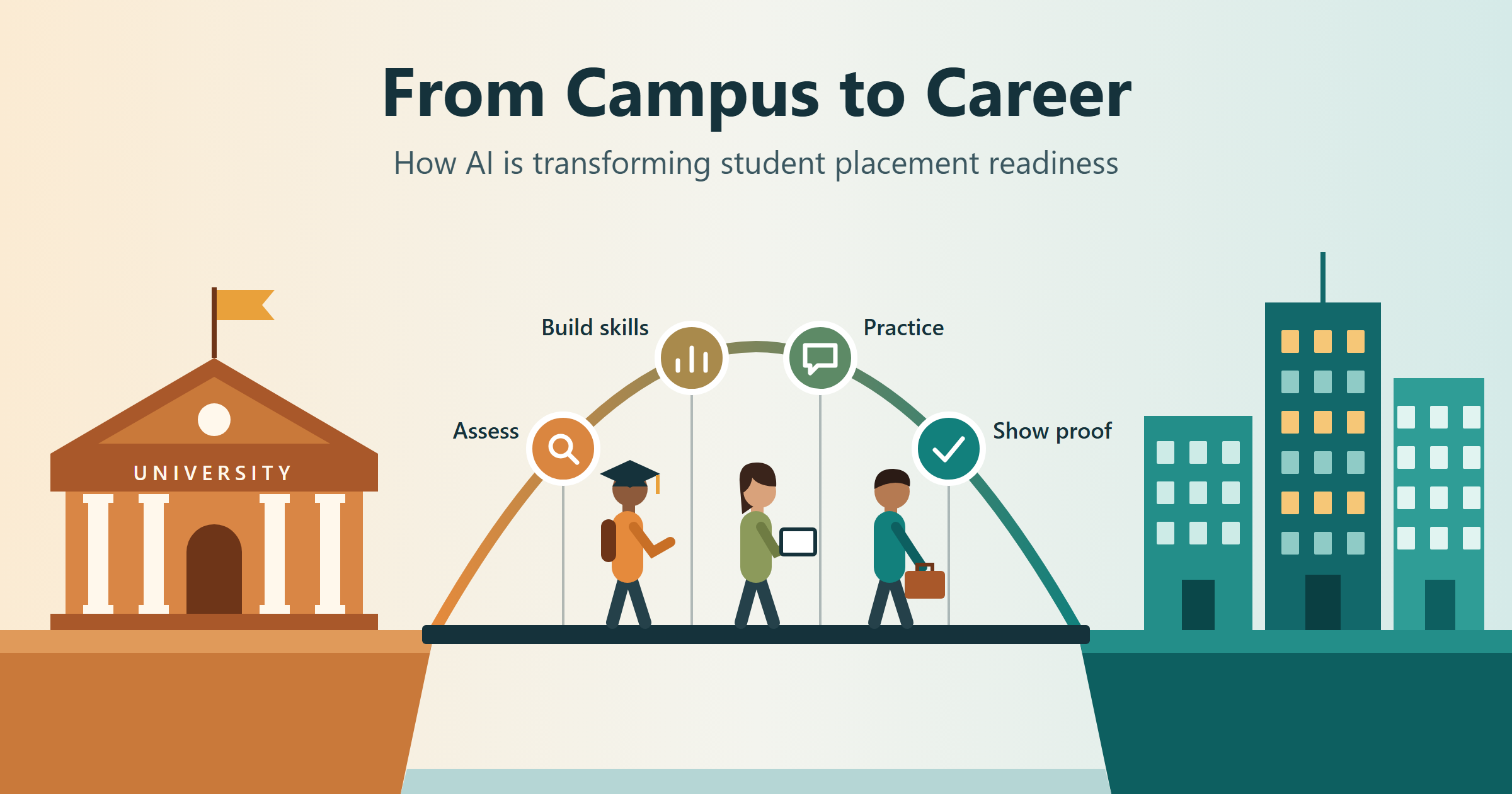
From Campus to Career: How AI Is Transforming Student Placement Readiness in Universities
In many universities, placement preparation begins in earnest only a few months before recruiters arrive. Students rush to finish résumés, aptitude practice, and mock interviews. Placement teams coordinate employers, verify eligibility, and try to support hundreds or thousands of students at once.
By then, the most useful information has often arrived too late. A student who learns in the final year that their problem-solving or communication needs work has little time to improve.
AI can help universities see those gaps sooner and respond to more students individually. It cannot replace good teaching, employer relationships, or career counselors. Its value lies in making readiness visible while there is still time to act.
What Is Student Placement Readiness?
Student placement readiness is the extent to which a student can demonstrate the skills a target role requires, communicate them clearly, and make informed career choices.
It has four parts:
- Role Skills: Technical, analytical, or domain knowledge.
- Workplace Skills: Communication, collaboration, and judgment.
- Evidence: Projects, internships, portfolios, and assessments.
- Career Clarity: Understanding suitable roles and what they demand.
Grades contribute to this picture but don't complete it. A student may perform well in exams and still struggle to explain a project. Another may have an average GPA and an excellent body of practical work.
Why Traditional Placement Preparation Falls Short
1. Support Arrives Too Late
Placement cells often meet students close to the hiring season, when coaching can improve presentation but rarely builds a missing skill.
2. Everyone Receives Similar Training
A generic aptitude or interview program is easier to run at scale. Yet a computer science student targeting data roles and a commerce student targeting financial analysis need different preparation.
3. Feedback Is Limited
After an unsuccessful interview, many students hear only that they weren't selected. Without specific feedback, they may repeat the same mistake with the next employer.
4. Placement Data Looks Backward
Placement rate and average salary describe what has already happened. They don't show which current students need help, or which skills are weak across a department.
How AI Is Changing Student Placement Readiness
1. Identifying Skill Gaps Earlier
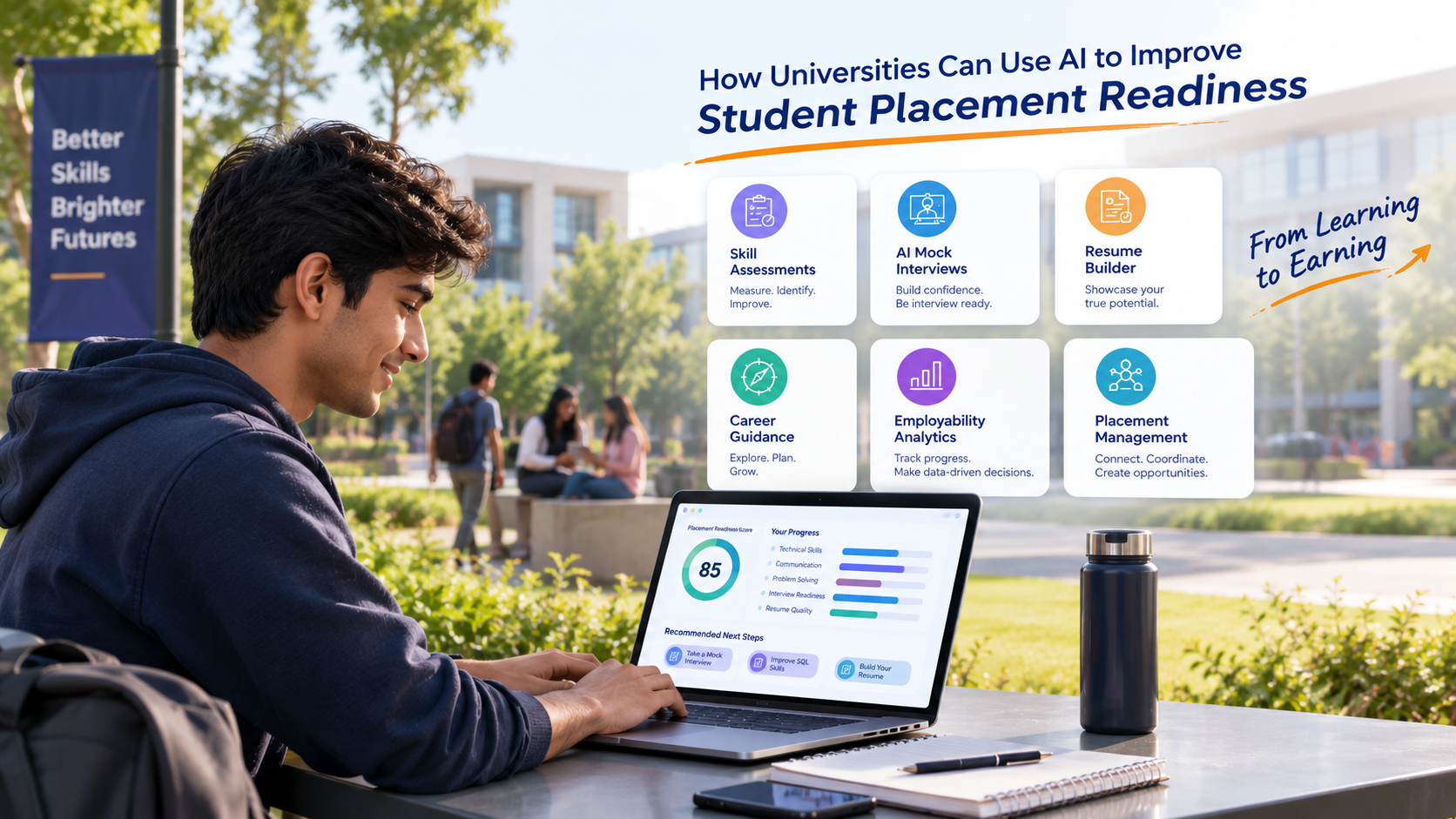
AI can help compare a student's demonstrated skills with the requirements of a target role. Assessment results, coursework, and projects can be brought together into a clearer skills profile.
Consider a hypothetical third-year student interested in business analytics. Their statistics is strong, but an assessment shows limited SQL and a case exercise reveals difficulty explaining findings.
"Improve your analytics skills" becomes a specific plan: complete a SQL project and practice presenting insights.
2. Making Assessment More Relevant
Well-designed skill assessments ask students to apply knowledge through coding tasks, case scenarios, or job simulations. AI can support question selection, evaluation, and pattern analysis.
The quality of the assessment still matters most. Universities should ask whether it measures skills the role actually needs, and whether results are consistent across student groups.
3. Expanding Interview Practice
AI-led mock interviews let students practice repeatedly, without waiting for a faculty or alumni slot. Feedback can cover the structure, relevance, and completeness of an answer.
Universities should be cautious about tools that score facial expressions, accent, or emotion. These signals can disadvantage students with disabilities or different linguistic and cultural backgrounds, and may say little about job performance.
4. Moving Beyond Résumé Keywords
Semantic matching looks at meaning rather than exact terms. It may recognize that "built a sales forecasting model" is relevant to predictive analysis, even when those words are absent from the résumé.
For students with limited work experience, this can make projects and transferable skills easier to recognize. Match results should broaden the conversation about suitable roles, not restrict which roles a student may pursue.
5. Giving University Leaders a Forward-Looking View
Aggregated readiness data can reveal patterns across programs. If students in several departments struggle with written reasoning, the answer may be a curriculum change rather than another pre-placement workshop.
This gives academic leaders, faculty, and placement teams a shared basis for action.
The READY Framework for Universities
Universities can use this five-step approach to introduce AI with a clear purpose.
| Step | What to Do | Question to Answer |
|---|---|---|
| R: Role Mapping | Define skills for priority roles with employers and faculty. | What does readiness mean for this role? |
| E: Early Assessment | Establish a baseline before the final year. | Where is each student starting? |
| A: Actionable Support | Connect gaps to courses, projects, or mentoring. | What should the student do next? |
| D: Demonstrated Evidence | Build portfolios and reassess skills. | Can the student show progress? |
| Y: Yearly Review | Compare readiness data with outcomes and employer feedback. | Which interventions are working? |
Start with one or two departments and a small group of roles. A focused pilot makes it easier to test data quality and earn faculty trust.
Which Metrics Should Universities Track?
Placement rate remains important, but it needs context.
| Stage | Useful Measures |
|---|---|
| Readiness | Baseline skill levels, improvement over time, portfolio completion. |
| Participation | Assessment completion, counseling use, mock interview activity. |
| Conversion | Application-to-interview and interview-to-offer rates. |
| Outcomes | Role relevance, internship conversion, early retention where available. |
| Equity | Access and outcomes across relevant student groups. |
Read these measures together. Higher practice activity, for example, means little if skills or interview conversion do not improve.
Responsible AI: What Universities Must Get Right
Readiness scores can influence a student's confidence and access to opportunity, so governance should be in place before rollout.
- Explain the Purpose: Tell students what data is used, why, and who can see it.
- Use Development Data Carefully: A low practice score should not quietly become an employer screening criterion.
- Keep People Accountable: A trained person should review consequential decisions.
- Test for Bias: Review results across groups, including students with disabilities, where lawful and appropriate.
- Provide a Way to Challenge Results: Students should be able to correct data and request a review.
- Limit Collection and Retention: Keep only what is needed, under applicable privacy law.
- Protect Access: Account for language, device, and connectivity barriers.
AI cannot make placement free of bias. Structured criteria, regular testing, and human oversight can make bias easier to detect and reduce.
What Remains Human?
AI can show that a student's interview answers lack structure. It may not know that the student is anxious, supporting a family, or pursuing a career chosen by someone else.
Career counselors provide that context. Faculty develop deep knowledge, alumni share lived experience, and placement officers build employer confidence. Technology serves them best when it reduces repetitive work and gives them time for these conversations.
Building a Stronger Bridge Between Campus and Career
Universities and employers often describe the same student in different languages. Universities speak in courses and grades, while employers increasingly look for demonstrated skills.
A shared skills view can connect the two. Understanding how employers evaluate candidates helps universities prepare students for the expectations they will meet.
PeopleXM approaches hiring through this lens: relevant skills, fair evaluation, and better-informed decisions. Its experience with AI-powered hiring and smart skill assessments can help inform a more consistent conversation between campuses and recruiters.
The universities that benefit most from AI will be those that use its insights early, explain them openly, and turn them into support students can act on.
Start with one question: How many of your pre-final-year students know which skills stand between them and their target role?
Keep reading